
Saah Naomi is sixteen. She is a student at GBHS Atiela in Bamenda, her favourite subject is Computer Science, and her favourite thing to do when nobody is asking her to do anything is draw.
She came to the Togeva STEAM Summer School this year to learn the fundamentals — what an algorithm is, what a tag does, how to make a sprite jump. Five weeks later she had published a website whose subject is her: who she is, what she can do, what she has built, what she loves, and how to reach her. It is live on the internet, its source code is open, and she typed it by hand.
We are proud of her. This post is about what she made, and why a personal portfolio is a bigger first project than it sounds.
What she built
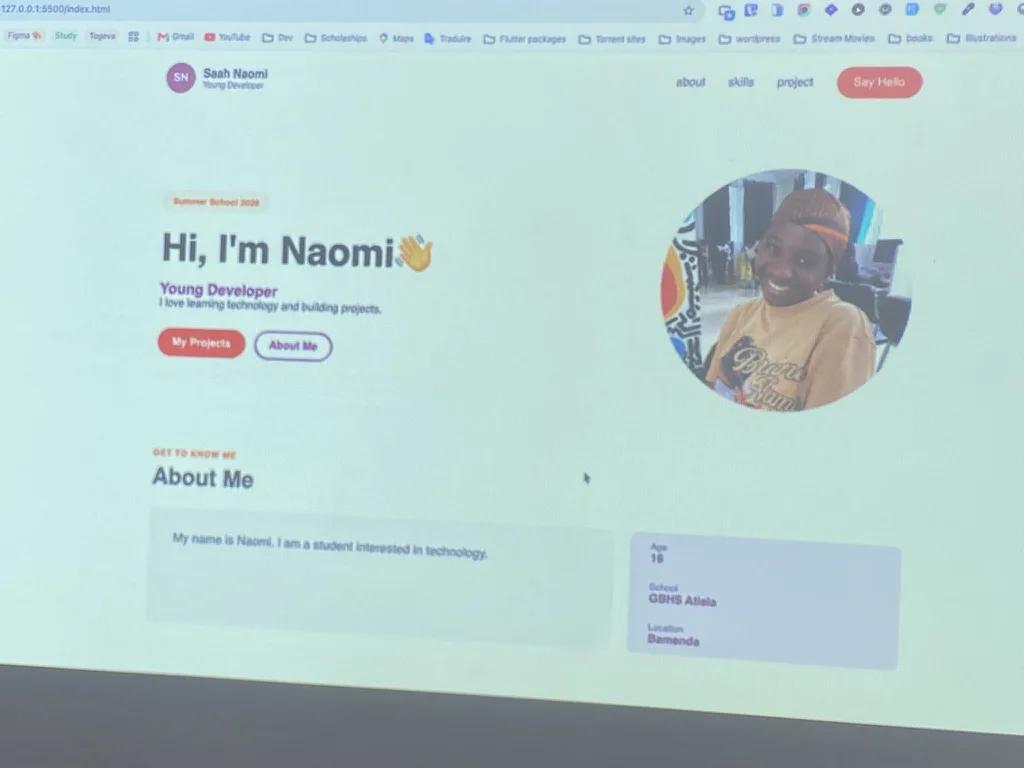
The site opens the way she would introduce herself in person: Hi, I'm Naomi. Underneath, she gives herself a title — Young Developer & Creative Thinker — and a sentence about what she enjoys: learning technology, building projects, and turning her ideas into something people can use.
From there it moves through eight blocks. An About section with the facts she chose to share: her age, her school, her city, her favourite subject, her favourite hobby. A Skills section listing four: HTML for structure, CSS for colour and style, Scratch for animations and games, and UI/UX design for laying out simple interfaces. A Projects section. A section called Things I Love. And a closing block, Let's Connect, echoed by a "Say Hello" button waiting at the top of the page.
It is written in HTML and CSS and laid out with flexbox. No framework. No template. No page builder. A purple palette, a circular frame around her photo, a pill-shaped button for each thing she loves — every one of those is a decision she made in a stylesheet, line by line.
The project where the student is the subject
The web development track shipped three sites this summer. Two of them are about the world: a fourteen-section explainer on artificial intelligence, and a sourced account of the Anglophone Crisis. Naomi's is about Naomi.
That sounds like the easy option. It is not.
A portfolio forces questions most sixteen-year-olds have never been asked to answer in writing. What can I actually do? What have I made that I am willing to show? What do I care about? How do I want a stranger to describe me after one screen? She had to answer each of them before she could write the HTML for it — and then she had to put her name and her face on the answers.
At Togeva we spend a lot of time arguing that orientation has to come before study: that young people need to know who they are and what they are drawn to before they are asked to choose a path. Naomi's site is that exercise, done by a student, in public, in code.
From blocks to tags
Her Projects section tells the story of the five weeks better than we can.
The first two entries are games built in Scratch. Dino Game, in which you jump over obstacles to push your score higher. Catch The Apple, in which you move to catch whatever is falling. The third entry is My First Website — HTML and CSS, built during the Summer School.
The page she lists it on is that website.
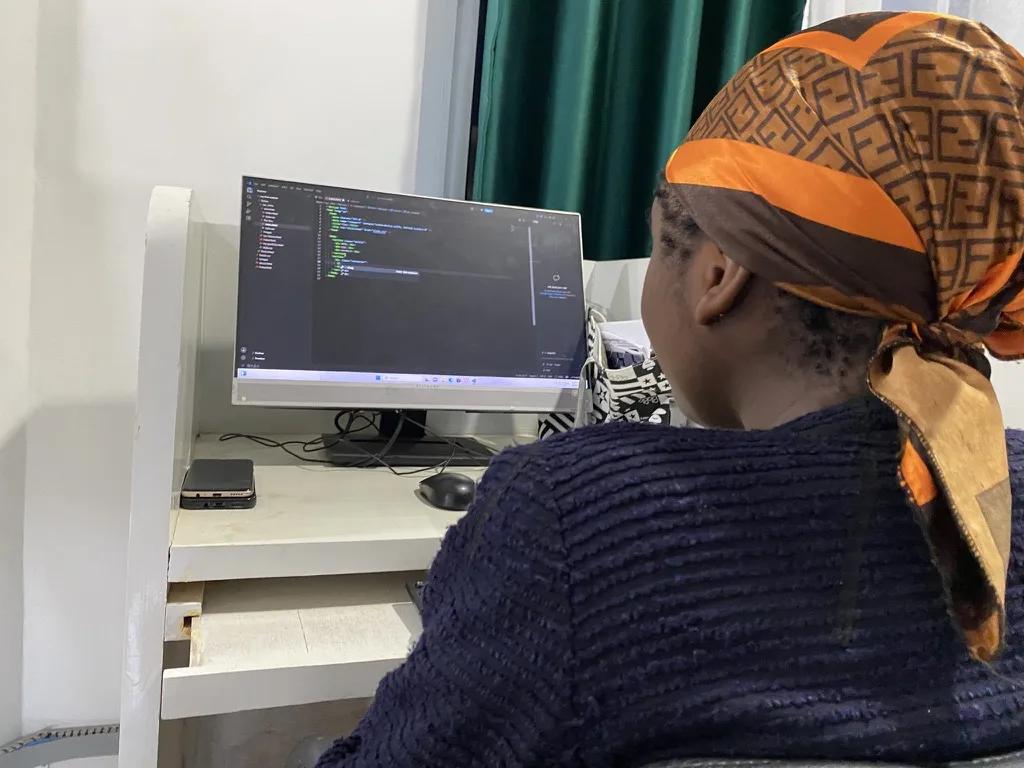
It also changed while she built it. In an early version, photographed running from her own laptop before it ever went online, her About section was a single line: she was a student interested in technology. By the time she published, it had grown into a paragraph about curiosity — how websites, games and robots work, why she joined the summer school, and what the site is for. She rewrote herself as she learned more about what she could do.
And she did not build it to be finished. Under her projects she wrote that more are coming every week. It is a page designed to keep growing with her.
Drawing, then designing
Drawing is her favourite hobby, and you can see it in the site. She lists UI/UX design as a skill in its own right, and the layout backs it up: generous space, a consistent palette, buttons that look like buttons, a hero section that knows where your eye should land first.
Things I Love lists six: gaming, robotics, coding, football, drawing and reading. It is an honest list from a sixteen-year-old, and it is also a map. Games became her first two projects. Drawing became a design sense. Coding became the page you are reading about. Robotics is still waiting.
Five weeks
The five weeks covered CS fundamentals, algorithms, introduction to programming, programming with Scratch, and introduction to web development — hands-on projects, mentorship and teamwork.
Like everyone in her track, Naomi started by dragging coloured blocks into place. She finished with a published website.
Her portfolio was one of three sites shipped by the web development track this summer, alongside Understanding AI and CRISIS. All three are open source at github.com/togevacm.
The day she presented it
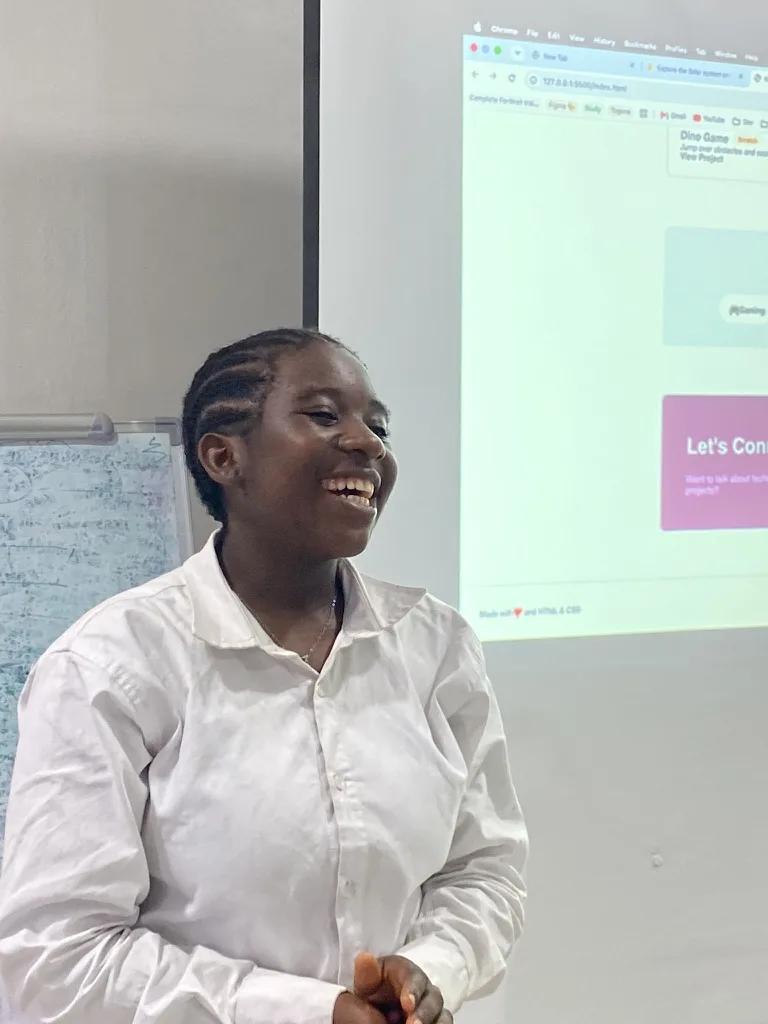
On the last day she stood in front of the room, put her site on the projector, and walked everyone through it — the introduction, the skills, the games, down to the things she loves and the button that says hello.
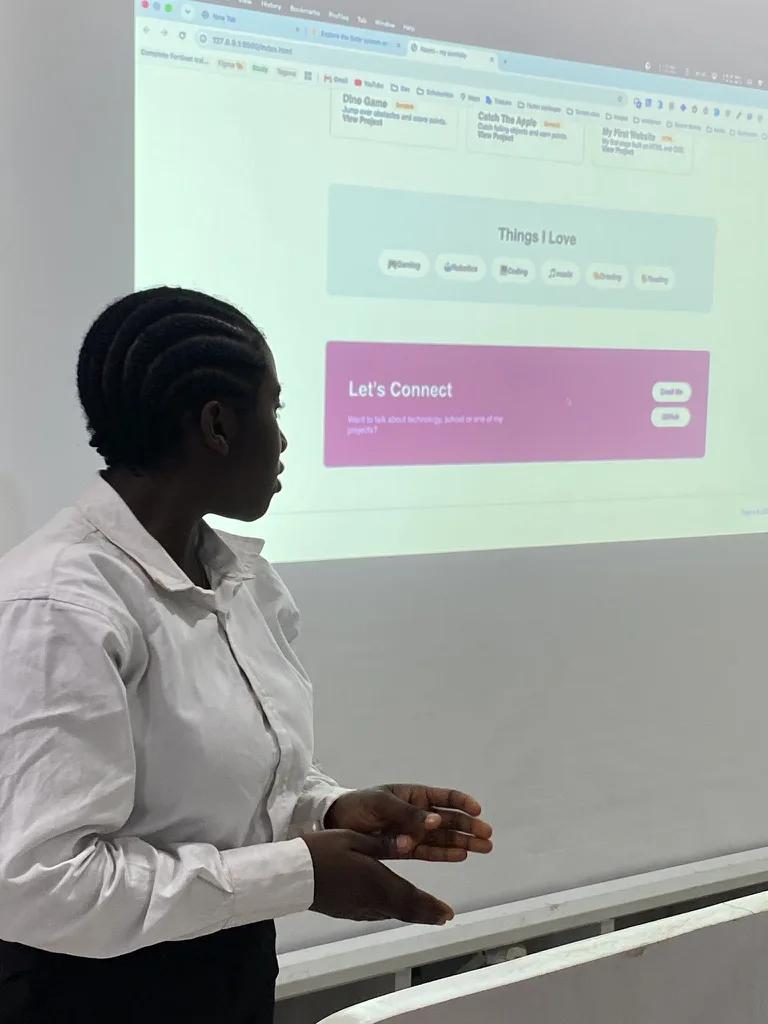
Presenting someone else's work takes nerve. Presenting a page that is entirely about you — your school, your hobbies, your first attempts — to a room full of your peers takes more. She did it smiling.
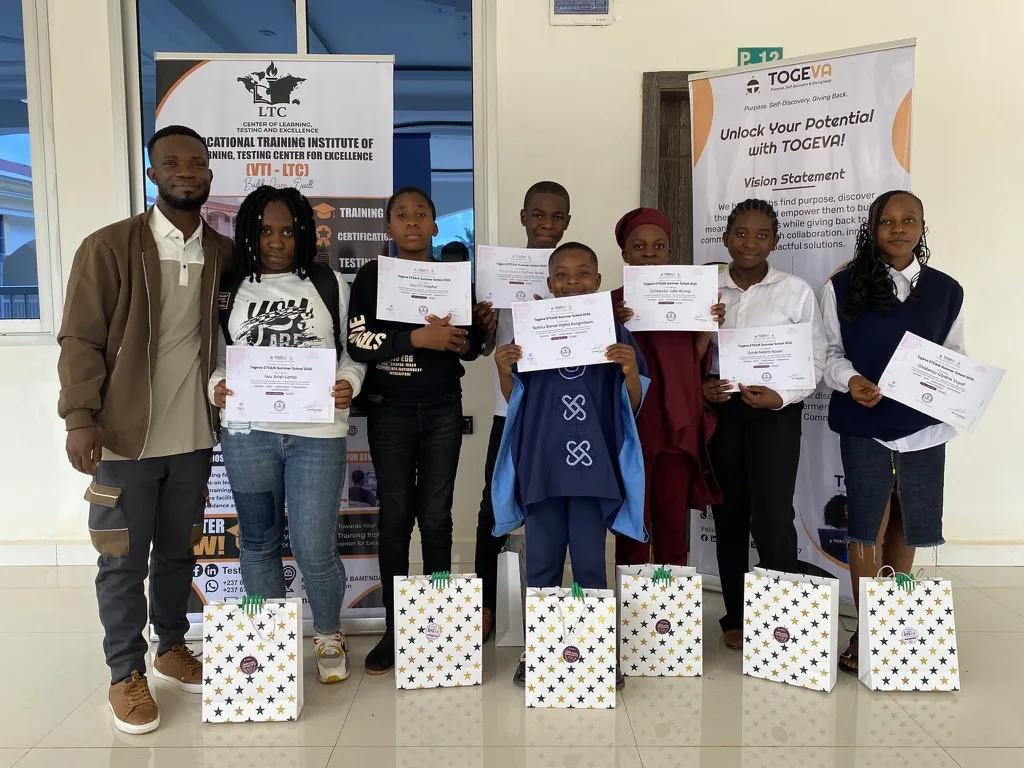
Certificates
What comes next
Naomi's site ends with an invitation to get in touch. It is the right ending, because the most important thing about the page is that it is not finished.
What she has now that she did not have in July is proof — a thing she made, on the internet, with her name on it, that she can keep adding to. Every new game, every new design, every new skill now has a place to go.
That is what the five weeks were for. Not to turn young people into developers overnight, but to move them from the side of the screen where technology happens to you, to the side where you make it. And for a sixteen-year-old in Bamenda who loves drawing, games and robots, it is a start on the bigger question our orientation programme exists to help with: knowing who you are well enough to choose where you are going. We intend to keep walking that road with her.
Saah Naomi — we are proud of you.
Read her project: Saah Naomi — My Portfolio · Source code